


03.2026 Conference 2026: 5 years after the flood
What the scientific community says on the 5th remembrance day of Ahr flood/Ahr valley
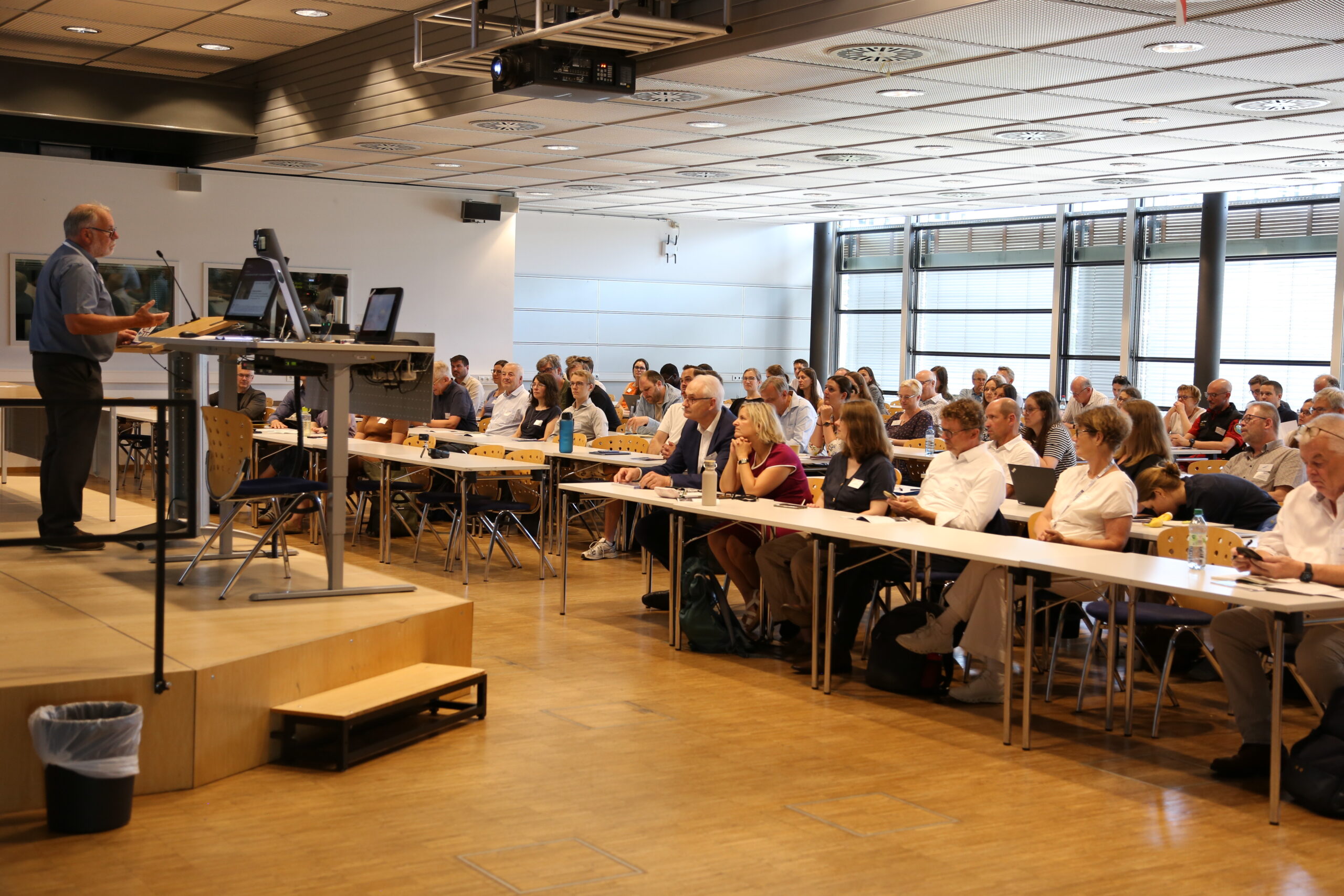
From July 2 to 4 the scientific conference was held at the Rhein-Ahr-Campus in Remagen. 250 scientists attended the conference in person or online to listen to latest studies and results from the region and discuss them. 13 universities and scientific organisations came together to hold this event. One day was dedicated to several field trips to the region, to meet local residents and gain insights into special perspectives. A group von Valencia also joined the programme.
The conference aimed to identify the insights gained through scientific analysis of the flood and to determine which questions remain unanswered from a scientific standpoint. Researchers are particularly interested in how to successfully and rapidly adapt to the challenges posed by climate change and what factors facilitate this process. Consequently, maintaining contact with all stakeholders in the region remains crucial. A joint summary of findings i currently being drafted, and plans are in place to publish the conference results; this will be announced here once completed.
Overall, the researchers emphasised that – with the exception of a few isolated examples – the region remains insufficiently prepared for another flood event. Further they pointed out 10 aspects to work on:
10 aspects to work on:
- We are learning from history. Known historical flood events are not yet being factored into scenarios or assessments.
- We can and should also learn more from other regions. The Valencia region is one example currently being examined from various perspectives.
- Interdisciplinary cooperation among all stakeholders—from private citizens to crisis management teams—helps improve the system.
- The long-term effects of disasters on affected populations have been insufficiently studied and are consequently not adequately considered in relief and reconstruction efforts.
- Research regarding vulnerable groups, in particular, could be intensified. In doing so, multiple cause-and-effect relationships should be addressed.
- Information flow and communication from policymakers and government agencies (and, to some extent, aid organizations) to flood-affected populations are inadequate and prone to misunderstanding. There is a lack of mutual understanding regarding the differing operational logics, expectations, and interests of the various actors involved.
- There is a lack of analysis regarding how many scientific recommendations (e.g., from advisory processes involving scientific guidance) have actually been implemented.
- In addition to an inter-municipal approach to flood protection, these issues should be viewed holistically in the future to ensure the best possible positioning against upcoming water management challenges—key topics include the interplay between floods and heavy rainfall, as well as between flooding and drought.
- People in the Ahr Valley should not have to choose between remaining rooted in their home region OR living in a flood-safe environment.
- If suitable flood-retention areas cannot be developed nearby, new construction and housing concepts must be incorporated into planning (e.g., building vertically and promoting communal living arrangements).
 powered by